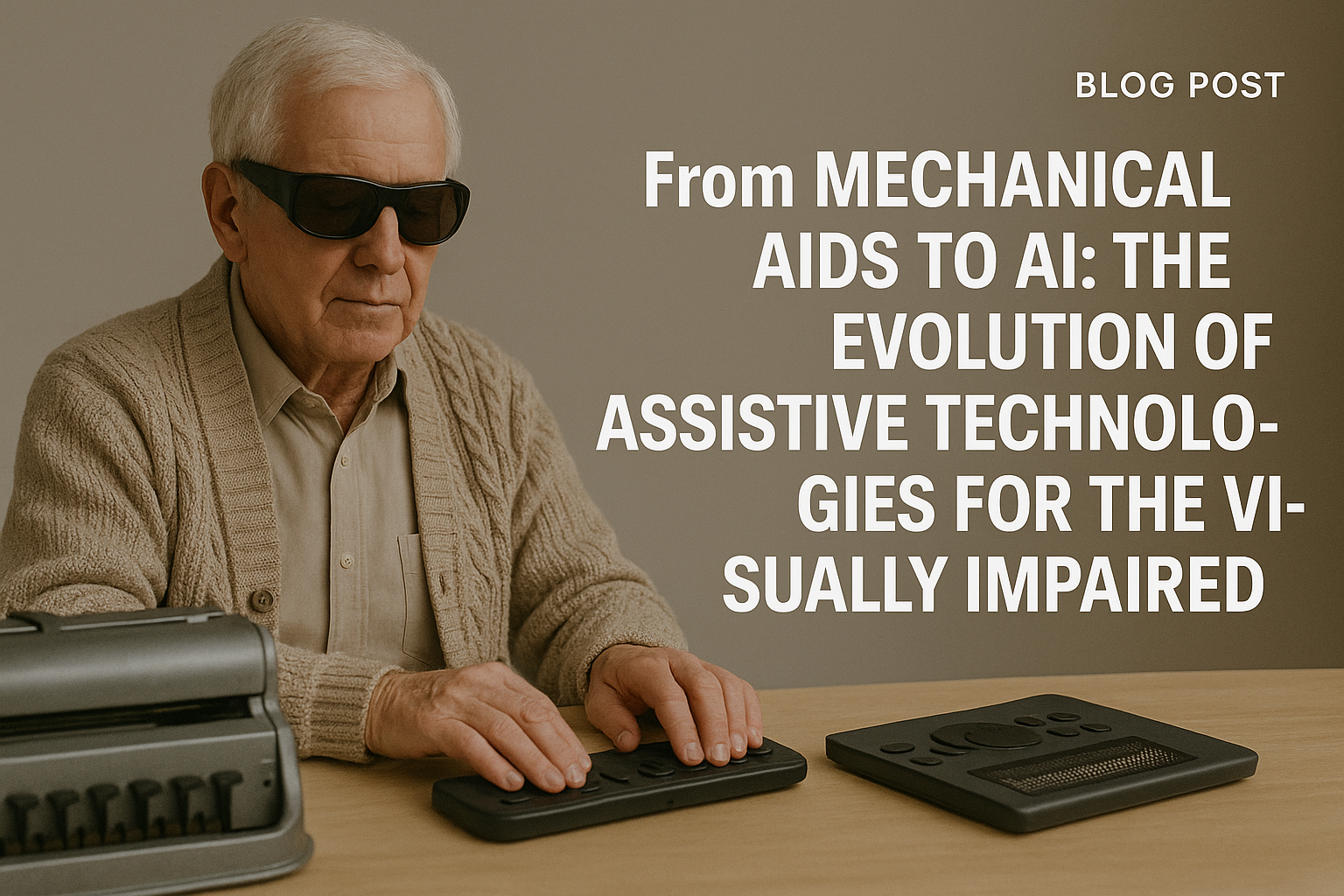
From Mechanical Aids to AI: The Evolution of Assistive Technologies for the Visually Impaired
The journey toward digital inclusion for blind and visually impaired individuals has been a remarkable story of innovation, perseverance, and technological advancement. Over the decades, assistive technologies have transformed from simple mechanical devices to sophisticated software powered by artificial intelligence, opening doors to information, communication, and independence. In this post, we explore the rich history and evolution of these tools, highlighting key milestones, influential innovations, and the ongoing challenges and opportunities for developers today.
Early Innovations: Mechanical Devices and Braille Technology
The roots of assistive technology for the visually impaired trace back centuries. Louis Braille's invention of the Braille system in 1824 revolutionized tactile reading, providing a tactile alphabet that can be read by touch. This breakthrough laid the foundation for accessible reading and education.
In the late 19th and early 20th centuries, mechanical reading devices emerged to aid those with visual impairments. One notable example is the Braille Typewriter introduced in the early 20th century, enabling users to produce Braille documents more efficiently. Later, mechanical reading machines, such as the Kurzweil Reading Machine (developed in the 1970s), used optical character recognition (OCR) to convert printed text into tactile or auditory output.
These early innovations were pivotal, but their reliance on physical media and manual operation limited widespread access to digital content, which was still in its infancy.
The Rise of Electronic and Digital Solutions: Braille Displays and Screen Readers
The advent of electronic technology brought significant advancements. The development of refreshable Braille displays in the late 20th century marked a turning point. These devices used tiny pins that raised and lowered to form Braille characters dynamically, allowing users to read digital text from computers and later mobile devices.
In parallel, screen readers emerged as essential tools for digital accessibility. Software like JAWS (Job Access With Speech), introduced in the early 1990s, enabled visually impaired users to navigate graphical user interfaces through synthesized speech output and keyboard commands. The emergence of Apple's VoiceOver (2004) and NVDA (NonVisual Desktop Access) further democratized access, providing free or affordable options for users worldwide.
These technologies shifted the paradigm from physical media to digital content, greatly expanding access to information, education, and employment opportunities.
Accessibility Standards and Policies: The Role of WCAG
As digital technologies proliferated, there was a growing recognition of the importance of universal accessibility. The Web Content Accessibility Guidelines (WCAG), developed by the World Wide Web Consortium (W3C), set technical standards to ensure web content is perceivable, operable, understandable, and robust.
Introduced in 1999 and regularly updated (WCAG 2.0 in 2008, WCAG 2.1 in 2018), these guidelines have been instrumental in shaping accessible web design. They encourage developers and designers to incorporate features like keyboard navigation, text alternatives for images, and adaptable content, making digital products more inclusive.
Compliance with WCAG not only benefits users with disabilities but often improves overall usability for all users, fostering a more equitable digital environment.
Major Milestones, Software, and Hardware
- Kurzweil Reading Machine (1970s): Early OCR-based reading aid.
- Refreshable Braille Displays (1980s-1990s): Key for tactile access to digital text.
- JAWS Screen Reader (1990s): Pioneering speech output software.
- Apple VoiceOver (2004): Integrated screen reader on iOS devices.
- Smartphones and Mobile Accessibility: The launch of the iPhone in 2007, with built-in VoiceOver and accessibility features, revolutionized mobile accessibility.
- AI and Machine Learning: Recent developments include AI-powered image recognition (e.g., Seeing AI by Microsoft), real-time scene descriptions, and voice assistants, further bridging accessibility gaps.
Impact of Smartphones and AI on Accessibility
Smartphones have been a game-changer, offering portable, all-in-one devices that integrate a multitude of assistive features. Touch gestures, voice commands, and sensor-based navigation make digital content accessible on the go. AI has taken this further, enabling tools like object recognition, text extraction from images, and contextual understanding to assist users in real-time.
Applications such as Seeing AI provide spoken descriptions of surroundings, text, and even faces, empowering users with unprecedented independence. Virtual assistants like Siri, Google Assistant, and Alexa facilitate voice-controlled interactions, reducing reliance on visual interfaces.
Shaping Digital Inclusion: Progress and Challenges
The evolution of assistive technologies has undeniably advanced digital inclusion. More people than ever can access information, participate in online communities, and pursue education and employment.
However, challenges remain. Despite technical progress, barriers like inconsistent implementation of accessibility standards, digital literacy gaps, and disparities in resource availability persist. Developers and product teams must prioritize inclusive design and continually innovate to address these issues.
Opportunities for the Future
Emerging technologies offer promising avenues for further enhancing accessibility:
- AI and Deep Learning: Improving real-time captioning, sign language interpretation, and personalized assistive solutions.
- Universal Design Principles: Embedding accessibility from the outset of product development.
- Open Standards and Collaboration: Promoting interoperable solutions to ensure compatibility across devices and platforms.
Conclusion
The journey of assistive technologies for the blind and visually impaired reflects a broader narrative of technological progress driven by the desire for inclusivity and equality. From Braille typewriters to AI-powered scene understanding, each milestone has contributed to a more accessible digital world. As technology continues to evolve, it is imperative for developers, designers, and policymakers to collaborate in creating innovative, inclusive solutions that serve all users—ensuring that digital progress benefits everyone, regardless of ability.
By understanding the historical trajectory and current landscape of assistive technologies, we can better appreciate the importance of ongoing innovation and inclusive design in shaping a more equitable digital future.