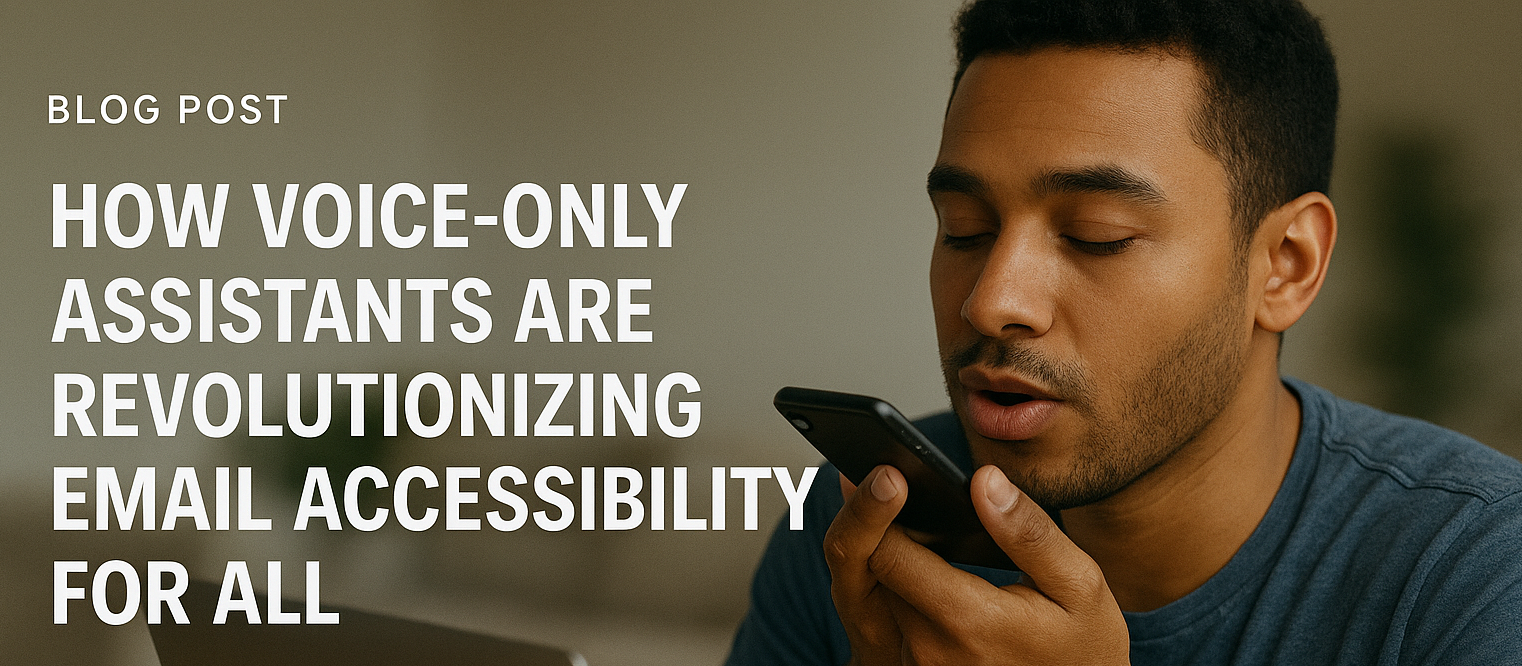
How Voice-Only Assistants Are Revolutionizing Email Accessibility for All
In an increasingly digital world, email remains a vital communication tool for personal, educational, and professional interactions. However, for many individuals—especially those with visual impairments, motor disabilities, or age-related challenges—accessing and managing email can be a daunting task. Enter voice-only assistants: innovative technologies that are transforming how we interact with our inboxes and making email more accessible to everyone.
The Rise of Voice-Only Assistants
Voice-only assistants like Amazon Alexa, Google Assistant, Apple’s Siri, and Microsoft’s Cortana have become household staples, enabling hands-free control over a variety of tasks. From setting reminders to controlling smart home devices, these assistants understand natural language commands and respond in real-time. Their growing capabilities are now extending into the realm of email management, offering new avenues for accessibility.
How Voice-Only Assistants Enhance Email Accessibility
1. Hands-Free Email Management
One of the most significant benefits of voice assistants is the ability to manage emails without manual input. Users can ask their assistant to read new messages, delete spam, or flag important emails, all through simple voice commands. This is especially beneficial for individuals with motor impairments who find typing or navigating screens challenging.
2. Improved Readability and Comprehension
For users with visual impairments, reading lengthy emails on screens can be difficult. Voice assistants can read emails aloud, allowing users to comprehend messages without needing to see or hold a device. This hands-free, auditory approach facilitates better understanding and reduces eye strain.
3. Faster Email Access and Responses
Voice commands enable quicker access to crucial information. Instead of scrolling through an inbox, users can directly ask their assistant to find emails from specific contacts or about particular topics. Additionally, users can dictate responses, making email communication more efficient.
4. Multitasking and Increased Productivity
Voice assistants allow users to handle emails while engaged in other activities, such as cooking, exercising, or working. This seamless multitasking capability ensures that important messages are not missed and that users stay connected without interrupting their routines.
5. Accessibility for Elderly Users
Older adults may face difficulties with traditional email interfaces due to declining vision or dexterity. Voice assistants offer a more intuitive and less physically demanding way to stay connected, fostering independence and reducing feelings of isolation.
Challenges and Considerations
While voice-only assistants offer remarkable benefits, there are challenges to consider:
- Privacy and Security: Voice commands may inadvertently expose sensitive information. Ensuring secure authentication and private environments is essential.
- Accuracy and Misinterpretation: Voice recognition may sometimes misunderstand commands, leading to errors. Continuous improvements in AI are reducing these issues.
- Compatibility: Not all email services or devices are fully integrated with voice assistants, which can limit functionality.
Future Outlook
As artificial intelligence and natural language processing continue to advance, voice-only assistants will become even more capable and reliable in managing emails. Integration with more email platforms, enhanced security features, and smarter AI will further improve accessibility, making digital communication more inclusive.
Conclusion
Voice-only assistants are transforming email from a potentially inaccessible task into an inclusive, effortless experience. By enabling hands-free management, facilitating comprehension, and supporting multitasking, these technologies are breaking down barriers for users with disabilities and making digital communication more accessible for everyone. As we move forward, embracing these tools will be key to fostering a more inclusive digital environment where communication is seamless, regardless of physical ability or technical skill.
Ready to get started?
Get yourself an AI personal assistant for your email